ITC's first foreign venture in the hotel space - a premium and luxury mixed-use development - has been "adversely impacted" by Sri Lanka's economic crisis, the firm said. The $300-million project under WelcomHotels Lanka (Private) Limited (WLPL), a wholly-owned subsidiary of ITC, comprises a luxury hotel and a super-premium residential apartment complex on 5.86 acres of prime sea-facing land in Colombo. In its latest annual report for financial year 2021-22 (FY22), ITC mentioned that the project's construction was running on schedule till the third quarter (Q3) of FY19, but was adversely impacted due to disruptions in the aftermath of the terror incidents in 2019 and thereafter by recurrent waves of the Covid-19 pandemic.

The industry may account for just 0.05 per cent of the total volume of single-use plastics in the country. And the product it uses is just one among the 22 - including spoons, forks, plates, knives and trays - that will be banned across the country from July 1 by government order. Yet, it is the plastic straw that is at the centre of public focus as fast-moving consumer goods (FMCG) companies make a last-ditch effort to get the government to extend the deadline.
Apart from being the most successful cases under the IBC, Bhushan Steel and Essar Steel are among the best steel assets in the country. They also ended up helping their lenders get back a significant chunk of the money while allowing Tata Steel to consolidate its position and giving the world's two largest steel makers - ArcelorMittal and Nippon Steel - a strong foothold in India. A significant contrast was the pace at which these two cases were resolved under the bankruptcy code. In the annals of the Insolvency and Bankruptcy Code (IBC), Essar Steel may go down in history as the most noticeable resolution with the world's largest steelmaker, ArcelorMittal, and the incumbent, Ruia family, locked in an intense battle spanning more than two years and ultimately resulting in full recovery of the principal amount for the financial creditors.

'We showcased about 20 use cases in 5G trials in Pune and Gandhinagar and some of them were interesting and innovative.' 'However, which ones will take off and which ones would not be relevant, we don't know yet.'

The Cellular Operators Association of India (COAI) has bluntly told the government there is no reason for its members to roll out 5G networks as they will be unviable if 'captive private wireless networks' are allowed to be run by enterprises. The COAI, which has Bharti Airtel, Reliance Jio and Vodafone Idea as its key members, has written to Communications Minister Ashwini Vaishnaw saying there is 'no business case for the roll out of 5G networks'. Permitting such captive networks will 'diminish the revenue so much that there will be no viable business case left for the telecom service providers and there will not remain any need for 5G network roll out by telecom service providers (TSPs)'.

Japanese tech investor SoftBank may end up investing around $1 billion in India in 2022, nearly a third of what it did last year, according to people closely tracking its plans. Last year, SoftBank undertook investments of $3.2 billion in 12 deals. In the first five months of CY22, the giant investor has invested $400-500 million in five deals.

Electric scooter registrations of eight companies which represent 95 per cent of the market have seen a sharp fall of over 24 per cent in May. They have registered 32,680 electric scooters against 43,098 in April according to VAHAN data from the Ministry of Road Transport and Highways available till the evening of 31 May. Auto analysts say the fall is a reflection of the initial pent up demand in the market for such vehicles,which was evinced in huge bookings, being met.
The chipset accounts for over 25%-30% of the cost of an average smart phone. Hence, a reduction in its price, device makers say, will make a huge difference to the cost of a phone.

Recently, world headlines buzzed with Elon Musk's announcement that he was shelving his audacious bid for social media platform Twitter. Away from the media spotlight, questions are being asked about the maverick billionaire's plans in India, too. A few days ago, a Reuters report said Musk's flagship Tesla had put on hold its plan to launch electric cars in India.
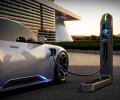
The country's first ever carmaker, Hindustan Motors, is looking at a second coming. Talks are on for a joint venture with a European auto company focused on the electric vehicle (EV) space. A memorandum of understanding (MoU) has been signed and due diligence is expected to start shortly and will take 2-3 months to conclude.

Telecom gear makers, who are in talks with telcos, say that if all goes well, they are ready to roll out the first phase of 5G services from October this year and cover the country's top 30-50 cities (in limited areas) by March 2023. The gear makers expect the telecom companies to give them a heads-up about their plans as well as the equipment required by July, and have promised deployment in three to four months after that. India's main telecom gear suppliers are Nokia, Ericsson and Samsung.

It is not the first time the history of the Godrej family is being written. In its centenary year in 1997, film journalist and former editor of Filmfare and Screen B K Karanjia had, at the behest of the industrial family, penned a voluminous two-part history, tracing their trials and tribulations since 1897. So, what made the family want to tell its story again 25 years later? And not through another book, but through a completely different medium?

The six billion plastic straws sold with every small tetra pack of juice, milk, lassi, coffee and other drinks can be replaced by paper straws to protect the environment but it will have to be done in phases. That was the message of the presentation made by FMCG companies using small tetra packs last week by their body, the Action Alliance for Recycling Beverage Cartons. The association told the Environment Ministry that companies need 18 months from the ministry's deadline of July 1 - when the ban on the use of single plastics for straws, plates and spoons comes into effect - to make the transition.

The electric scooter juggernaut which has been picking up momentum with heady growth month-on-month is now slowing down. The combined number of registrations in April of eight electric two wheeler companies has seen a dip of over 1 per cent to 43,061 vehicles, according to data from the Ministry of Road Transport & Highways' site VAHAN. The reasons are the continuing shortage of chips, especially after the Ukraine-Russia war, and the spate of fires which have led to scooters being recalled by manufacturers.

Over the past decade, a change in consumer choice swept through the battery industry - the walkman lost its mojo, smartphones took over cameras and batteries were tucked away in remotes and wall clocks that hardly needed frequent call-ups. The result: Brand Eveready lost mind space. And the company's attempt to stick to the on-ground marketing activities didn't quite help. But Eveready, now at the cusp of change, is putting things right - a new Give Me Red television commercial has been launched after a gap of 7 years featuring an empowered bride ski-diving to her wedding venue. The creative, according to Eveready sources, is in sync with the brand doctrine.
Amway maintains the action was related to a case in 2011 and it has been cooperating with the investigative agency.

After the Ukraine war, coke prices just soared and most units don't have money left to buy raw material. Customers are not absorbing the price escalation'
In 2013, weeks after getting bail in a case of alleged cheating in Kerala, Amway India's then managing director, William Scott Pinckney, declared that the company was aiming to hit revenues of Rs 10,000 crore in India in a decade. Fast forward to 2021, and Milind Pant, Amway's global CEO, announced that the company has designated India as one among the top three markets for growth and investment (after US and China), and is now looking at hitting revenues of Rs 20,000 crore over the long term.

As the economic crisis in Sri Lanka - the world's largest exporter of orthodox tea - continues to rage across the island nation, tea producers in India look to cash in on the opportunity to seize the market. The country's largest tea growing company, McLeod Russel India, expects orders to come in from July. "A huge opportunity is coming up for everyone in India. "McLeod Russel is well placed because we have the capacity for orthodox tea," said Azam Monem, director, McLeod Russel. About 10 per cent of McLeod's production is orthodox tea.

In a fragmented electric three-wheeler market where no company has more than a 10 per cent share, leave alone a dominant presence, can Bajaj Auto storm in and become king? The company is set to launch its range of electric auto rickshaws in June and hopes to replicate its success in ICE three-wheelers where it is the undisputed market leader with a 63 per cent market share. Can it be crowned king of the electric three-wheeler market too? Overall, electric sale volumes are growing at breakneck speed.
 © 2026 Rediff.com - Advertise with us - Disclaimer - Privacy Policy - Sitemap - Feedback - About us - Terms of use - Grievances